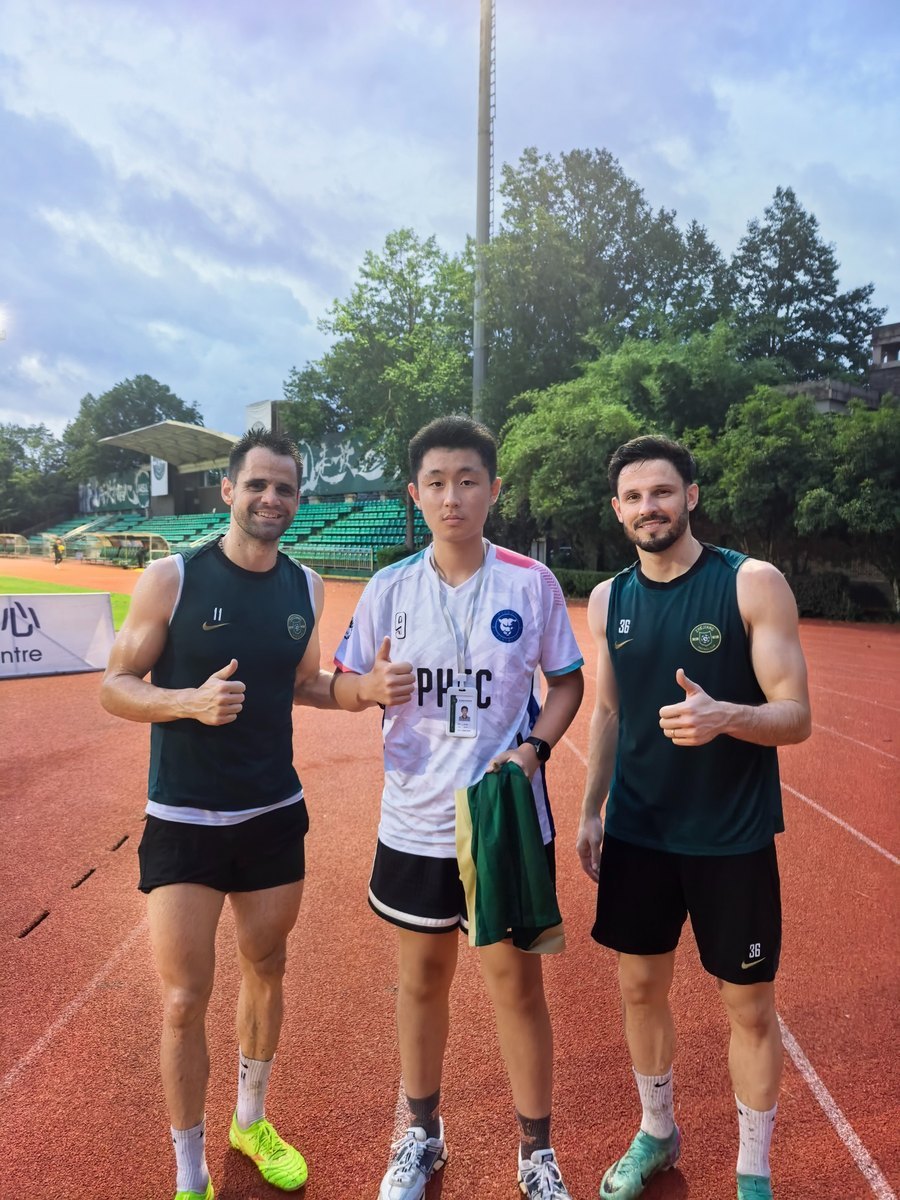
How one question slowly grew out of the football field
In primary school, I began attending football training every weekend. Before each session, our coach had us run, warm up, and think about protecting ourselves. At the time, I never seriously thought about what “sports health” meant. It was simply part of getting ready to play.

During the European Championship, I joined a youth football event and appeared online with former England star Michael Owen. In that same tournament, Denmark’s Christian Eriksen suddenly collapsed on the field. For the first time, I saw CPR and an AED become part of a top-level football match. He survived. I could not fully explain why it affected me so much, but I realized that sometimes the most important thing in a match is not the score.

Before my high-school entrance exam, I still took a long subway ride to Qiantan Sports Park to train with adults. The games were more physical, and I began seeing injuries more often. Once, a teammate was suspected of having a fracture. Some people did not know what to do, while others quickly helped immobilize him and contact assistance. The same injury produced completely different reactions. That small moment stayed with me.
That year, I attended a Manchester City fan event and spoke with former player Paul Dickov, who talked about how staying healthy is fundamental for a professional athlete. Not long afterward, 17-year-old Chinese badminton player Zhang Zhijie died after a medical emergency during competition. I thought about Eriksen again. The two incidents were different, but together they pushed me to learn seriously about cardiac arrest, CPR, AEDs, and emergency response. I began asking myself: if something similar happened on our school football field, would we know what to do?

Later, I joined the school football team and became vice president of the football club. I still loved the game, but I began noticing things I had ignored before: whether there was an AED near the field, what to do when a teammate was injured, how professional athletes recover, and why some people know how to respond in an emergency while others do not. Phirst Aider really began with these very specific questions.