For the first time, I looked closely at how the state of the body can be recorded as data.
After returning from the professional football club, I began thinking about a question I had rarely considered: beyond a doctor’s judgment and an athlete’s own feelings, can data help us understand what is happening in the body earlier?
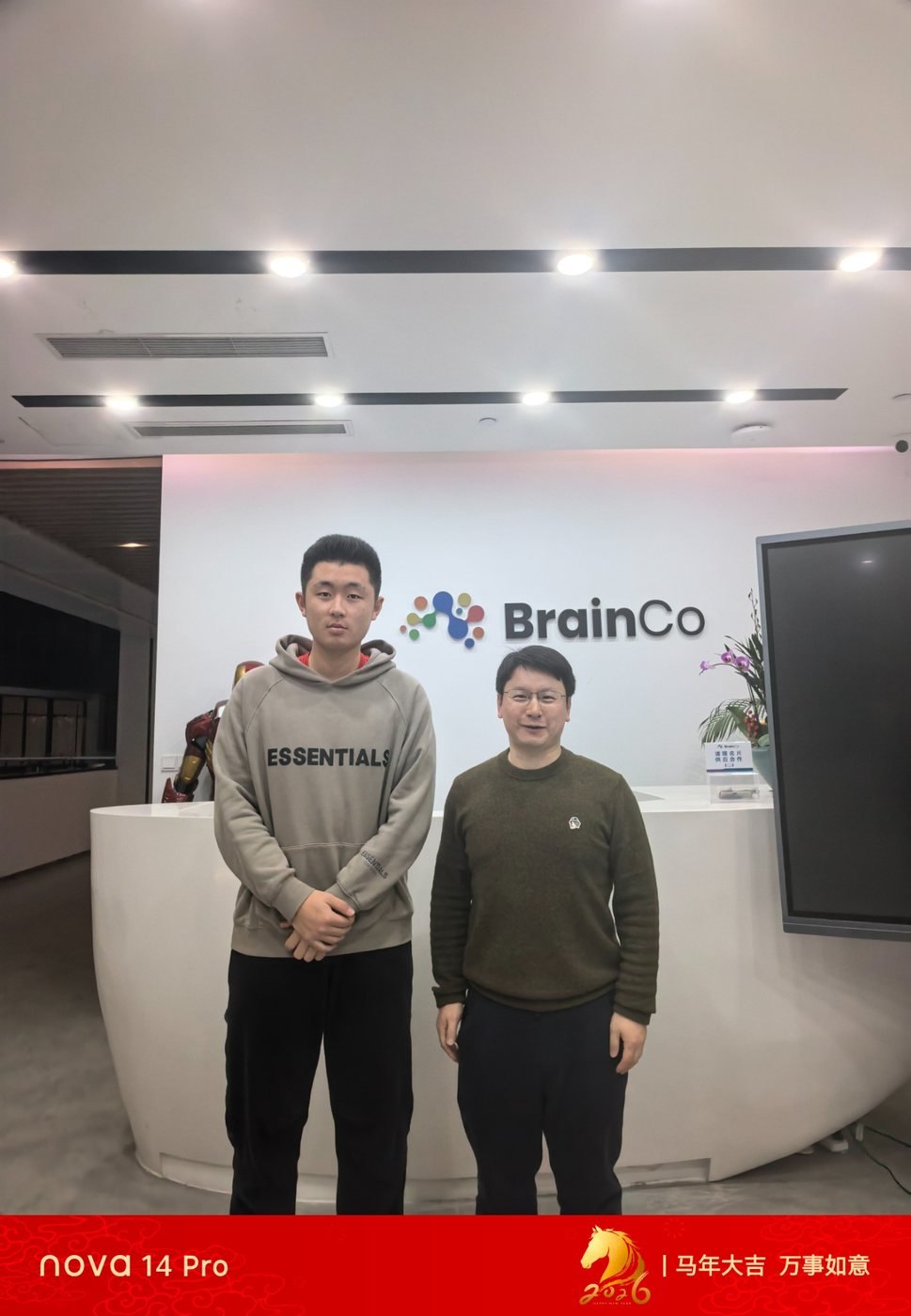
With that curiosity, I spent time at BrainCo during the winter of 2025 and encountered brain-computer interfaces and human-data collection up close for the first time.
In the exhibition area, I saw people using intelligent prosthetics to write and play music. What interested me most was not the prosthetic itself, but the question behind it: how can very weak signals from the body ultimately become a real movement? It was my first intuitive glimpse of how the brain, nerves, muscles, and machines can connect.

01 Seeing a signal become an action
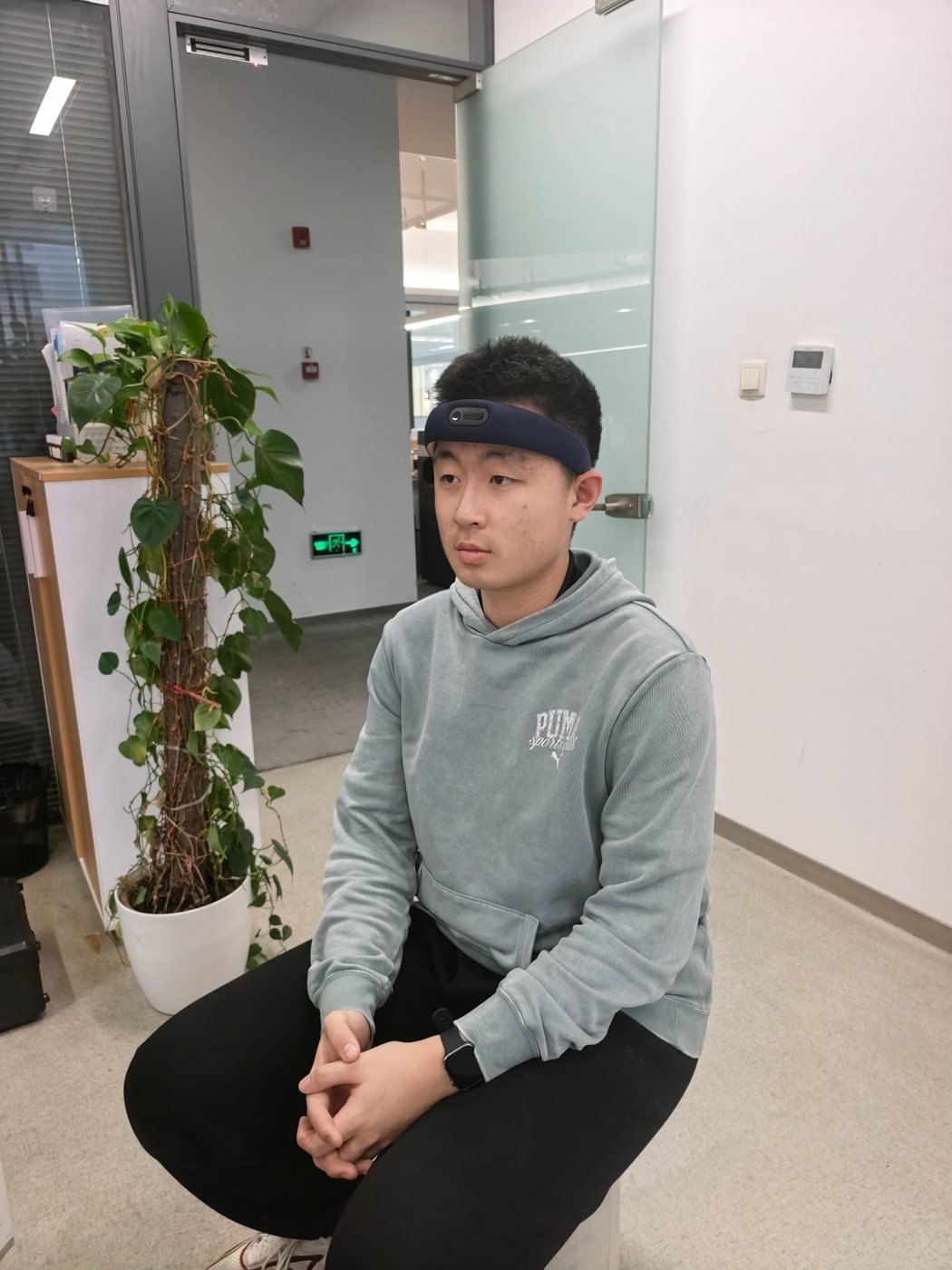
During the experience, I tried EEG equipment and began learning the basic ideas behind different brain-computer interface technologies. The first time I saw an EEG waveform, I realized that a “brain signal” is not an abstract concept. It is first a set of data that must be collected, cleaned, and interpreted.
02 Looking closely at body data
I also helped organize PSQI sleep data and worked around eye-tracking and actigraphy devices. Much of the work was less “magical” than technology headlines make it sound. Organizing data could be repetitive and required care. But those ordinary tasks helped me understand something basic: before technology can enter health care, the state of a human body has to become information that can be observed, recorded, and compared.
03 My idea of rehabilitation changed again
I used to think of rehabilitation as “injury → treatment → recovery.” I began to see that it can also include monitoring, identifying a problem, making a judgment, intervening, and reassessing. I do not know how large a role brain-computer interfaces will ultimately play in sports rehabilitation. But this experience made me interested in the connections among sports health, neuroscience, data, and AI.
Technology often sounds impressive, but what interests me is not the label “AI.” I want to know whether these technologies can eventually help a real person recover better, exercise more safely, or regain an ability they had lost.